the Frankie Avalon & Annette Funicello iconic fun-in-the-sun frolic Beach Blanket Bingo and the hit Elvis Presley spring break musical Girl Happy opened.
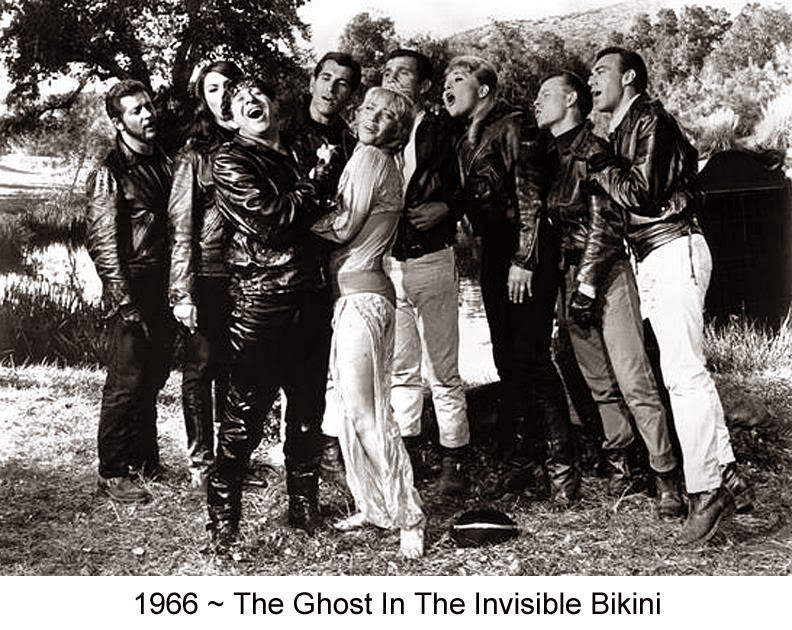
 In the immortal words of Eric Von Zipper, Beach Blanket Bingo is “nifty.” It is the best, the zaniest, the quirkiest, and most fondly remembered of the Frankie and Annette epics. Admittedly, the busy story centering around Annette’s Dee Dee proving to Frankie that girls can skydive while trying to keep him away from an amorous instructor (Deborah Walley), Bonehead (Jody McCrea) falling in love with a mermaid (Marta Kristen from TV’s Lost in Space), and a beautiful singer (Linda Evans subbing for Nancy Sinatra who dropped out of the film) kidnapped by Erik Von Zipper (Harvey Lembeck) and his biker gang is far-fetched. But it contains some very funny moments mostly delivered by Buster Keaton and his va-va-voom foil Bobbi Shaw, Don Rickles as Big Drop, and Paul Lynde as an acid-tongued press agent whose verbal sparring with Avalon is one of the movie’s highlights. All your AIP favorite stars are here (including John Ashley, Donna Loren, Mike Nader, Salli Sachse, Mary Hughes, Patti Chandler, Ed Garner, Luree Holmes, Johnny Fain, Linda Opie, Alberta Nelson, Myrna Ross, Andy Romano, etc.) enhancing the action.
Another big plus for Beach Blanket Bingo is the music score. The songs are some of the best from the series beginning with the title song—the grandest opening number of all the beach-party movies. The up tempo tune is sung in such a light and bouncy manner by Frankie and Annette that you can’t but help want to jump to your feet and dance along. They also do well with their second duet, the popular “I Think, You Think.” Pretty Donna Loren turns up early to expertly belt out the heart wrenching “It Only Hurts When I Cry.” Jackie Ward delivers the Linda Evans lip-synced songs in fine style but it is The Hondells who standout with “The Cycle Set.”
Recalling the shoot, Jody McCrea said in my book Hollywood Surf and Beach Movies, “The scenes with Marta Kristen were actually filmed in the ocean. Marta nearly turned blue one day because the second unit guy took a lot longer than he should have to set up the shot. We all had to pretend how warm it was and it really wasn’t. Since I surfed during the winter because the waves were bigger it didn’t bother me as much.”

Bobbi Shaw was a bit disappointed with her role on this and remarked in my book Talking Sixties Drive-In Movies, “Buster and I were part of Beach Blanket Bingo from the beginning, but I really feel that they did not use us the way they should have. Look at his genius talent and they just had us running around.”

 Frankie and Annette and the beach party gang had stiff competition at the box office from Elvis and Girl Happy. Produced by Joe Pasternak for MGM and directed by Boris Sagal, Girl Happy was a combination of the studio’s Where the Boys Are and AIP’s Beach Party setting in on the shores of Fort Lauderdale during spring break. Since this was a film about the college crowd, MGM surrounded Elvis and leading lady Shelley Fabares with a talented bunch of good looking young people offering wonderful support.
Elvis played Rusty Wells leader singer of a successful combo (consisting of Gary Crosby, Joby Baker, and Jimmy Hawkins) drawing sell-out crowds at a night spot owned by tough-talking Mr. Frank (Harold J. Stone) in snowy Chicago. He renews their contract for another six weeks shuttling their plans to head to balmy Florida. Overhearing their boss arguing with his daughter Valerie (Fabares) about going on spring break with her college friends (Chris Noel and Lyn Edgington) to Fort Lauderdale, Rusty offers to be her secret chaperone. Soon he and the boys are off to the Sunshine State. Thinking Valerie has hooked up with a bookworm named Brentwood (Peter Brooks) Rusty concentrates on sexy Deena (Mary Ann Mobley) while the guys find their own bikini babes (Pamela Curran, Gail Gerber, and Rusty Allen). But Valerie rejects Brentwood and is attracted to Italian playboy Romano (Fabrizio Mioni) so every time Rusty and his boys get cozy with their gals, Valerie winds up in some sort of predicament and they have to rush to her rescue. Rusty then decides to romance her to keep her away from Romano and in the interim falls for the coed. However, she discovers he is being paid to watch over her. Hurt, she winds up drunk performing a striptease in a nightclub. After being broken out of jail by a contrite Rusty, she forgives him and they wind up happily ever after…maybe.
Recalling the movie in my book Talking Sixties Drive-In Movies Shelley Fabares remarked,
“I was a fan of his [Elvis] but I was not a rabid fan. I remember—and always will remember—the first day that I met him on the set. We were getting ready to rehearse our first scene and all of a sudden he was walking across the soundstage and I suddenly thought, ‘Oh my God. It’s Elvis Presley!’ You’re always nervous when starting a film but until I saw him that’s when I really got nervous…”