MIKE NADER TRIBUTE

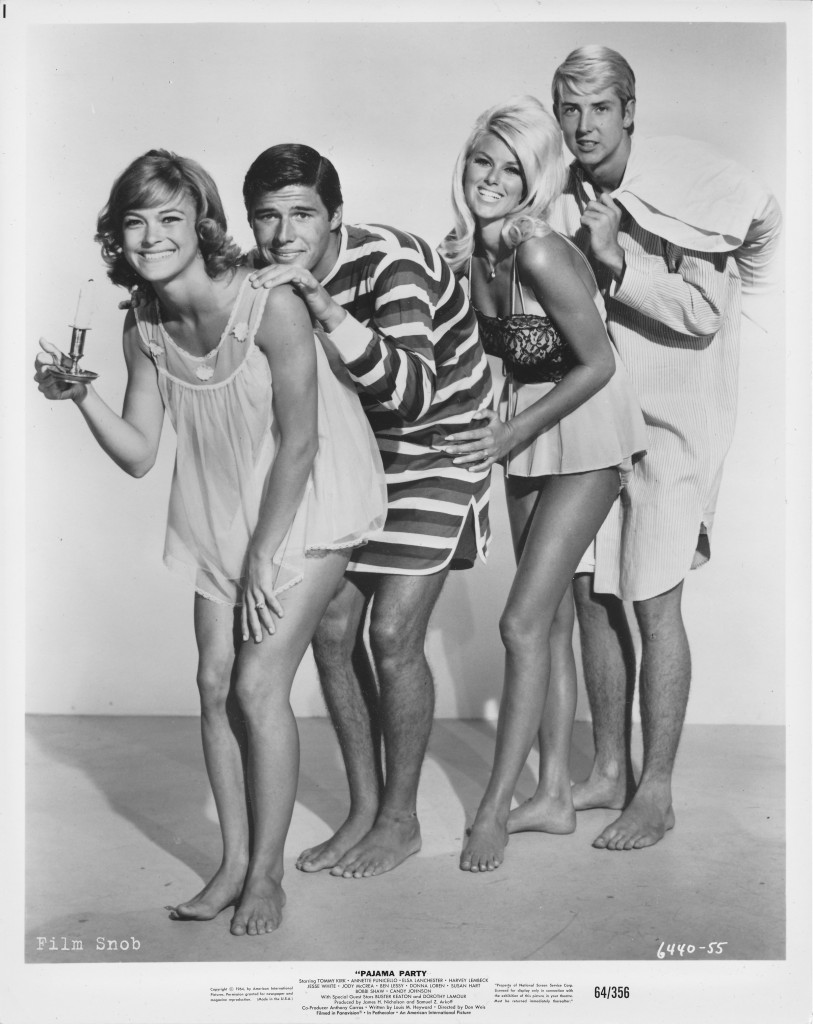
Sixties actor Mike Nader just celebrated a birthday so I thought I would pay tribute to the former surfer who stayed afloat in Hollywood long after the tide washed away the Beach Party movies. Tall, slim, athletic, with dark haunting features Mike immediately took to acting and the camera took to him.  Nader was just a part of the beach crowd in Beach Party (1964) and the first few sequels.  He graduated to featured player status with roles in Beach Blanket Bingo (1965), Ski Party (1965) and How to Stuff a Wild Bikini (1965), and on TV opposite Sally Field in the sitcom Gidget.

Michael Nader was born in St. Louis, Missouri on February 18, 1945.  When he was a small child his family relocated to Beverly Hills, California.  He attended Vista Grammar School and Beverly Hills High School where he became friendly with Ed Garner.  However, Nader was not part of that Beverly Hills crowd of mansions and Porsches.  His family lived in an apartment and he drove an old Woodie.  At school, his rebellious demeanor was forever getting him into trouble.  Surfing was his only escape.  He remarked in TV Guide, “You got a pair of trunks, the ocean, a board under you—and no regulations.”  Nader began hanging out with that legendary Malibu surfer crowd that included Mickey Dora and Johnny Fain.

Mike Nader was apart of the group of friends that Ed Garner introduced to director William Asher to surf double and populate the background in Beach Party (1963).  Asher immediately took to the young surfer and gave him lots of screen time.  Though he didn’t have many lines, Nader had a charisma that came across on the screen and made him a standout from the rest of the crowd. Nader remained part of the contingent of surfer boys in Muscle Beach Party (1964), Bikini Beach (1964) and Pajama Party (1964) but he began studying acting with guidance from Harvey Lembeck.

He finally broke free from the surfer boy pack in Beach Blanket Bingo (1965).  With John Ashley playing Frankie Avalon’s rival, this left the best friend role vacant.  Nader was then cast as boyish Butch, loyal buddy to Frankie and boyfriend of the amorous Animal played by Playboy Playmate Donna Michelle. However, his bromance moment with surfer Johnny Fain feeding him weiners during Donna Loren’s moment singing about unrequited love stands out.

In Ski Party (1965) Mike played college guy addle-brained Bobby, who with Steven Rogers as his pal, try to make time with Bobbi Shaw’s Swedish ski instructor.  Yah! Yah! In How to Stuff a Wild Bikini (1965) he was once again the boyfriend of Animal, now played by yet another Playboy Playmate Marianne Gaba, though his character was named Mike. With Frankie away on naval reserve duty, Mike’s loyalty switched to Frankie’s best friend, Johnny. In all his movies, Mike knew how to shake his cute booty and was always featured front and center during the dancing sequences.

In the fall of 1965, Nader played the recurring role of Peter Stone on the Gidget series starring Sally Field from 1965-66.  After finishing out his contract with AIP by playing Joey in the action film Fireball 500 (1966) with Frankie and Annette trading their surfboards for stock cars, Nader headed for New York.  He was accepted into Lee Strasberg’s Actors Studio and for the next ten years he studied and performed in Off-Broadway plays.  To earn money he waited tables and as with other beach party veterans such as Aron Kincaid and Salli Sachse he began modeling.

In 1976 Nader was cast as Kevin Thompson, a proposed love interest for the soap’s resident suffering antagonist and lush Dr. Susan Stewart (Marie Masters) in the daytime drama As the World Turns.  He described the character as “a mysterious unknown entity.”  When his contract ended in 1978 (his character, after helping Susan sober up, was killed off), Nader abandoned New York for Hawaii to surf and to reevaluate his life.

Instead of returning to the Big Apple, he decided to move back to Los Angeles in 1981.  He landed the role of handsome Greek Alexi Theophilus in the short-lived 1983 primetime soap Bare Essence starring General Hospital cast-off Genie Francis (ex-Laura) proving that daytime popularity does not guarantee primetime success.  He then beat out Dino Martin and Jon-Erik Hexum, among others, for the role of sexy and suave Dex Dexter who stole the heart of Joan Collins’ Alexis Carrington Colby on Dynasty from 1983-89.  Nader commented in Hollywood Drama-Logue, “I didn’t have the look they wanted.  I was the only one with a dark Mediterranean look.  But Joan and I clicked with the spirit they wanted.”  His love scenes with Collins smoldered across the small screens of America.  The role made Mike Nader an international TV star.  He was voted one of the sexiest men of the decade and was chosen to play Susan Lucci’s leading man in the TV-movie Lady Mobster (1988).

After Dynasty ended, Nader appeared in a few forgettable TV movies including Nick Knight (1989) and The Flash (1990), and the miniseries Lucky/Chances (1990).  In 1991 he joined All My Children as the mysterious count Dimitri Marick paired with Lucci’s Erica Kane and had another long run playing the part until 1999 when his role was written out.  However, the fans were outraged and flooded the network with complaints.  The soap rehired Nader in 2000 only to fire him a year later due to his arrest for possession of and selling cocaine at a social club.  The charges were reduced to misdemeanor possession and Nader entered a treatment program admitting to his drug and alcohol abuse.  Despite his taking responsibility for his actions, the producers of All My Children still refused to take him back after a nine-month recovery period.  Nader remarked to the New York Post, “And I was shocked because, you know, it hurts.”  He filed a lawsuit but it was thrown out of court. He returned to an online reboot of All My Children in 2013 reprising his role. Unfortunately, the show was officially declared dead after short one season. This was Nader’s last known acting role.

Mike Nader is featured prominently in my book Hollywood Surf and Beach Movies: The First Wave, 1959-1969.

NOVA SPEAKS! LINDA HARRISON REMEMBERS PLANET OF THE APES

In honor of the 50th Anniversary of the original Planet of the Apes, I am re-sharing a revised interview with the original Nova Linda Harrison that ran in Filmfax magazine.

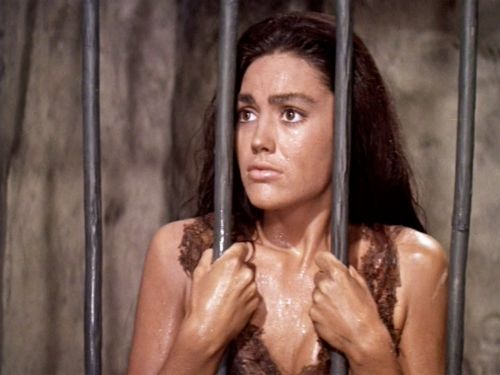
Linda Harrison will always be remembered as the beauty among the beasts. She left an indelible impression on 1960s moviegoers as the mute Nova, opposite Charlton Heston’s lost astronaut, Taylor, in the classic sci-fi films, Planet of the Apes (1968) and Beneath the Planet of the Apes (1970). With her long, dark hair and big, brown eyes, Linda had the perfect qualities to bring Nova to life on the big screen. “Nova means new,” reminded Linda Harrison. “I felt very comfortable playing her. I didn’t even have to audition. Dick told me I had the look they wanted.” Dick was Richard Zanuck, then head of 20th Century-Fox. It was on the studio lot that Linda met Zanuck, whom she married in 1969.

Beauty pageants led to an introduction to a young agent named Mike Medavoy who helped Linda get signed by 20th Century-Fox. The studio was restarting its acting school program for its contract players. At the time, the acting roster included Jacqueline Bisset, Tom Selleck, Christina Ferrare, Lara Lindsay, and Corinna Tsopei. After playing small roles in the unfunny Jerry Lewis comedy Way…Way Out (1966) and the better received comedy The Guide for the Married Man (1967) with Walter Matthau and Robert Morse, Zanuck then handed the brunette beauty the role she would become world famous for that of Nova in Planet of the Apes.

Before she was given Nova, Linda was part of the make-up creations by John Chambers who would go on to win a special Academy Award for his ingenious work. “I was used as a model for the make-up. That is what contract players did back then. You were being paid a weekly salary so sometimes you had to do things like this. The studio heads wanted to see if the makeup was doable. At that point they hadn’t green lighted Planet of the Apes yet. I had to lay back and be perfectly still as they put this plaster mold on my face. You had to know how to control your body. The whole process took about three hours.”

Lucky for Linda and Charlton Heston, they didn’t have to go through this process daily unlike co-stars Hunter and McDowall. Recalling the cast, Harrison remembered, “He [Heston] had a quiet quality about him. Charlton was gentle and was always looking after me. He taught me how to favor the camera. As an actor, I was someone he kind of took under his wing, which was good for the film. Sometimes, simple things like that transfer to the screen, and are very dramatic.”

“Roddy and Kim were great people and fabulous troopers. I’m not just saying that; they were pros. They had a difficult time with all that makeup. And they had to report to the set at 3:00 am!”

Director Franklin J. Schaffner (who would go on to win a Best Director Academy Award for Patton) was chosen to direct and per Linda had his own vision for the movie. “He was a very interesting man—very quiet. I remember Dick and I would have dinner with the assistant director on the movie. He and Dick were best friends. He would tell us nobody knows what the next shot will be, because Schaffner keeps it in his back pocket. He would only tell his cameraman, Leon Shamroy. But that lent itself to this kind of picture. It gave the actors a very interesting edge, not knowing what to expect next. I think his directly style worked very effectively.”

One of the film’s many standout scenes and one that remained vivid in Linda’s mind was when the audience first sees the marauding gorillas on horseback hunting the humans in the forest backed by Jerry Goldsmith’s haunting Oscar-nominated score. It was a very complicated action piece per Linda. “We had the humans running one way, some apes beating the bushes, and some others on horseback. I’m sure this scene was dangerous, but I wasn’t aware of it. I had total trust in the people in charge. This was shot in Malibu on the 20th Century-Fox ranch. They also built Ape City there. I remember it was always extremely hot. Even though I was scantily clad, my costume was made from real bark, with a rubber backing. I still felt the heat.”

After hurling through space for over 2,000 years, four astronauts land on a planet where humans are mute primitives, and apes are their masters. Of the space travelers, only Taylor (Charlton Heston) survives their first encounter with the apes, but he is shot in the throat by the marauding human hunting gorillas on horseback. He is taken to Ape City (along with other humans including an intense beauty he dubs “Nova”) where he tries to convince a sympathetic psychologist Dr. Zira (Kim Hunter) and her archeologist finance Dr. Cornelius (Roddy McDowall) of his intelligence. When he regains his speech, he proves his superiority, but is thwarted by Dr. Zaius (Maurice Evans) who has always been aware of man’s intellect as well as being the harbinger of death. The film climaxes in the Forbidden Zone with Taylor proving that apes evolved from humans only to have Zaius cover up the proof. Zaius allows Taylor to go off with Nova deeper into the Forbidden Zone only to discover the horrible truth: the planet of the apes is actually Earth, whose civilization was destroyed by mankind. Taylor is on his knees in the sand yelling, “You blew it up! Damn you! Damn you to hell! The camera peers up to reveal a wrecked Statute of Liberty in the film’s final shot.

For more on Linda Harrison’s career in Beneath the Planet of the Apes and off the Planet of the Apes, pick up a copy of my book Fantasy Femmes of Sixties Cinema.


If a Man Answers Comes on TV, Change the Channel!

Though I liked Sandra Dee, some of her comedies just don’t hold up. Case in point, the comedy If a Man Answers (1962). Though producer Ross Hunter seriously considered Nancy Kwan for the role, Sandra Dee is perfectly cast as a husband trapping coed in this irritating comedy. Basic premise of the movie is how inexperienced college girl Dee traps herself a man and then learns how to hold and change him with advice from her know-it-all Parisian mother Micheline Presle, an ex-dancer in the Folies Bergere. She professes to be an expert on ensnaring a man based on how she landed Dee’s American papa John Lund.

After the family moves from Boston to New York, Dee’s college aspiration are long forgotten and she now majors in putting the full court press on playboy fashion photographer Bobby Darin. Once she entraps him and they are wed, Dee becomes jealous of all the beautiful models her husband works with including miscast Stefanie Powers shrill as her snooty friend from Boston.

Dee then tries to change randy Darin into the perfect husband following her mama’s arrogant advice via a book on training him like you would a dog! When that backfires thanks to big mouthed drunken Powers, mama advises her daughter to create a fake lover named Robert Swan like she did years ago when feeling neglected. Darin gets his revenge when his father comes to town pretending he is the fictional lover unnerving Dee. All works out for the obligatory happy ending. Dee is perky and charming and looks fabulous in her chic wardrobe, but the movie is unfunny and hopelessly dated with cringe-inducing scenes of Presle giving marital advice none of which is just speaking truthfully to your spouse. Typical romantic comedy from the period aimed at teenage girls preaching to them that they should only strive to trap themselves a husband and then play tricks and games to keep your man in line. For their sakes, hopefully teenage boys from the period hated this piece of dreck and stayed away. Teenage girls obviously didn’t and the movie was a major box office hit.

https://www.youtube.com/watch?v=ULz3tBzYFKw

Mini-Review: The Reward (1965)

Trying to shake off her earlier ingénue roles, which she described as “frightened fawns,” Yvette Mimieux co-starred in The Reward (1965) from 20th Century-Fox and directed by Serge Bourguignon who also co-wrote the script. The Frenchman was still riding high from his hit movie Sundays and Cybèle that brought him an Academy Award nomination for writing. The actress was so determined to do this picture that she had to negotiate her way out of her contract with MGM. Obviously enamored of her director, she exclaimed, “He finished the screenplay six months before shooting and never changed a word. It’s his concept from beginning` to end and there’s nobody else to take credit or blamed. That’s the way to come up with a good film.” It will come as no surprise to learn that Mimieux and Bourguignon became romantically involved. Alas that was the best thing that emerged from this ambitious failure notable for one of the few westerns of the time to have its Mexican characters speak Spanish with English subtitles.

In this slow-moving modern western, which the critics just did not take to, Yvette is the companion of businessman Efrem Zimbalist, Jr. on the run for the kidnapping and murder of his partner’s young son whom he claims he did not kill. He is spotted by dust cropper pilot Max Von Sydow whose plane crashes in the small Mexican town where the fugitive stops. He convinces malaria-ridden police captain Gilbert Roland to pursue Zimbalist for the $50,000 reward. They do and are accompanied by Roland’s wild-eyed sergeant and two young deputies (Henry Silva and Nino Castelnuovo) none of whom speak English. Cars are traded for horses to traverse the rocky terrain and once the couple is apprehended things go from bad to worse when the sergeant learns of the bounty and the death toll begins to mount.

Yvette seems bewildered throughout always by Zimbalist’s side. At one point, she slips off her horse and viewers cannot tell if the actress fell asleep from the boredom or the character passed out due to the sun. Unfortunately for Mimieux, her role was nothing more than window dressing though she has a few intense moments vouching for Zimbalist’s innocence and pleading for their freedom. Even so, she is always a fave of mine and I like her here.

The ending fails to provide a satisfying wrap up leaving the survivors still lost in the desert. Needless to say, the film was reviled by the critics and bombed at the box office. Despite Mimieux’s high hopes for the picture, it did nothing for her career. In fact, the critic from the New Yorker called her “the poor man’s Carol Lynley.” Ouch! Even so, Yvette said back then that The Reward was one of her two favorites, the other being the lush soap The Light in the Piazza.