TINA TIME!


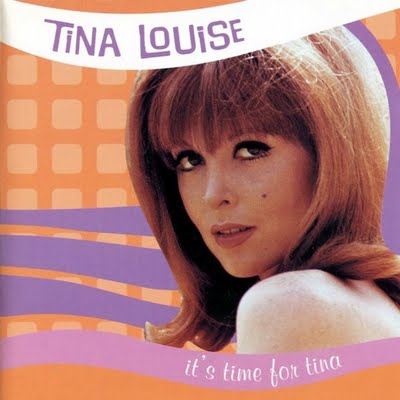
Readers of my Blog know that in the past I have expounded on the acting talents of that tasty titan-haired temptress Tina Louise. Prior to playing Ginger on Gilligan’s Island, she was a extremely respected dramatic actress who even studied at the Actors Studio. The below video is just another example where she gets to display those acting chops. Tina gives an expertly understated performance as a secretary obsessed with her boss, who she would do anything to protect, in this 1964 episode of Kraft Suspense Theatre. She is reunited with her God’s Little Acre co-star Aldo Ray as the boss and has a sexy chemistry with suave Clu Gulager as an insurance investigator. Her last scene is quite creepy. Incidentally, the blonde in it is Ellen McRae who morphed into Ellen Burstyn during the Seventies.

One wonders if Ms. Louise had not gotten stranded on the island of Gilligan what motion picture roles she would have scored during the Sixties. She easily could have essayed roles played by Stella Stevens or even Raquel Welch. And Tina would have made a hell of a better Tiffany Case in the James Bond adventure Diamonds Are Forever than the shrill Jill St. John.

httpv://www.youtube.com/watch?v=MvEZ37fW0K8

BOOK REVIEW: BEFORE I FORGET


Just finished reading James Sheldon’s pleasurable memoir Before I Forget: Directing Television: 1948-1988 from BearManor Media. I had never heard of Sheldon before until I met him at a Players Club function in NYC where he was interviewed about his career. At 92, he is in wonderful shape and truly a gentleman’s gentleman. Though I was not familiar with his name, I knew all the TV shows he worked on. Sheldon was one of many unsung, talented and very prolific TV directors of the time. He began his career in live television working on such classic anthology programs such as Studio One and Robert Montgomery Presents and comedies such as Mister Peepers. In the late Fifties he relocated to Los Angeles and went from directing such low-budget syndicated fare as West Point Story and Harbor Command to such classic shows as The Twilight Zone, Naked City, Route 66, My Three Sons, The Virginian, Batman all The way into the Seventies with M*A*S*H and MacMillan and Wife, to Cagney & Lacey and The Equalizer in the Eighties.

Sheldon presents a straight forward look at his directing career (well illustrated with behind-the-scenes photos of him at work) that began in radio and progressed by chance to live TV with the variety show, We, the People, the very first commercial program to be broadcast by CBS. He recalls the days of early television when the ad agencies, and not the Networks, were in control of the TV programs—and later how the whole TV industry changed when programs went from being produced live in New York to being taped in Hollywood. Being there from the beginning, Sheldon creates an important historical document and you learn how the business really took a turn for the worse during the Seventies and Eighties with extreme Network interference.

Having worked with a lot of famous people, the author’s most interesting tale is the relationship he developed with James Dean. It was interesting to learn that Dean almost wound up as a regular on the Mama TV series, but the original actor who was drafted was rejected by the military. It causes one to wonder how Dean’s career would have progressed if he got the role. There are many other big names that pass through this book (including a wonderful anecdote about Clint Eastwood fibbing that he could ski to get a role and a night out with Miss Julie Newmar while filming Batman). When Sheldon likes the person, he pours on the praise. But he also dishes about the actors/producers that he didn’t care for or had difficulties with. However, he does so in an almost apologetic, gentlemanly way, such as his recounting of working with the troubled Billie Holliday who was a guest on a variety show he was directing.

Sheldon is very forthright with confronting the mistakes he made in the past such as passing on directing the feature Fear Makes Out with Tony Perkins in 1957 due to his insecurities about taking on a motion picture, and the squabbles he had with some big name producers and Network executives that kept him from working on a few really popular shows.

While reading the former director’s book, I was struck by the difficulties there were in directing TV shows. Most actresses I interviewed for my books dismissed the TV directors they worked with. They claimed the directors never helped the actors give a performance—it was all about hitting your marks, saying your lines, and moving on to the next scene due to time constraints. Sheldon proved not all TV directors were like that with some very amusing anecdotes about trying to get better performances from such thespians as George C. Scott and others.

A breezy, fast read, my only criticism of the book is that I wanted more! At a slim 152 pages, I would have loved to have read additional anecdotes about the actors he worked with in more detail. That said, James Sheldon’s Before I Forget: Directing Television: 1948-1988 is a must for lovers of TV history—don’t you forget to buy a copy today:

 http://www.amazon.com/Before-Forget-Directing-Television-1948-1988/dp/1593936397/ref=sr_1_2?s=books&ie=UTF8&qid=1321841005&sr=1-2

THIS JUST IN…

Dueling Harlows has received its first official review and thankfully it is a rave:

“For fans of Jean Harlow or either of the actresses who portrayed her in “dueling” biopics, this will be a delicious read. As a lifelong Carol Lynley lover, I devoured it!

Exhaustively researched and lovingly written in extreme detail, Lisanti documents not only the competition between the producers/studios to secure, release and profit from their pictures (both were flops) but also provides synopses and interesting analysis of the players involved. You’ll learn more than you ever thought you could know about two rather obscure films of the early 1960s, but you’ll also get a sense of the industry at the time. Some fun photos enhance the enjoyment. Let’s get a 2 DVD set with Lisanti, Baker and Lynley commentaries!” –Nelson Aspen/journalist [www.nelsonaspen.com]


SLAYGIRLS RING, ARE YOU LISTENING


Click the below link to read a wonderful article about how secret agent Matt Helm went from hardboiled espionage tales in print to  pop camp-filled stories on the big screen when played by debonair Dean Martin opposite some of the big screens most beautiful women in The Silencers (Stella Stevens, Dahlia Lavi, Nancy Kovack); Murderers’ Row (Ann-Margret, Camilla Sparv); The Ambushers (Senta Berger); and The Wrecking Crew (Elke Sommer, Sharon Tate, Nancy Kwan, Tina Louise). Helm, masquerading as an international photographer, was assisted by amorous secretary Lovey Kraveszit (Beverly Adams) and surrounded by a bevy of sexy starlets as models called the Slaygirls or Slaymates.

http://www.cinemaretro.com/index.php?/archives/164-MR.-HELM-GOES-TO-HOLLYWOOD.html#extended

httpv://www.youtube.com/watch?v=RD69Ul9citc

One of the Slaymatess was Corinne Cole in Murderers’ Row (1966). Below is an excerpt from my interview with her for Glamour Girls of Sixties Hollywood:

In Murderers’ Row (1966) Cole brought new meaning to the term Slaymate as a seductive “Miss January.”  Wearing a body stocking and two pink muffs on her hands, the pin-up poses in front of a map of Minnesota for the Slaymate calendar.  After the shoot the seductive beauty sneaks into Helm’s bed and snuggles up to him.  Tired he asks her to leave and “to go out like a lamb” in which she retorts, “That’s March.  I want to wish you a happy new year” and begins kissing him.  But this slinky seductive Slaymate has murder on her mind not romance.  Alas her nefarious plan goes awry and ends not with a bang but a boom. 

Cole recalls “Nancy Kovack was in the first movie [The Silencers] and she was scheduled to play Miss January in this.  In between movies she married the great musician Zubin Mehta and passed on the film at the last second.  My agent called me and I went to Columbia Studios to read for the part.  I did not tell anybody that I knew Dean Martin socially.  I had to audition for this role five times until director Henry Levin finally offered me the part.

When I got on the set for the first day of shooting, which was our love scene in bed, Dean Martin said to me, ‘This is a hell of a way to miss my best friend’s wedding.’  Frank Sinatra was marrying Mia Farrow that day at the Sands in my apartment.  I said to Dean, ‘Yes, we are missing a big day.’  Nobody outside the Rat Pack knew they were getting married.  It was very funny to us.  I had a body stocking on because I was supposed to be nude but we couldn’t get the shot because my bra was showing.  Finally I said, ‘Frig it!  I’m taking off the body stocking!’  They closed the set for me and we got the take.  Dean said, ‘What a way to spend the day—being in bed with one of my best friend’s fiancée.’”